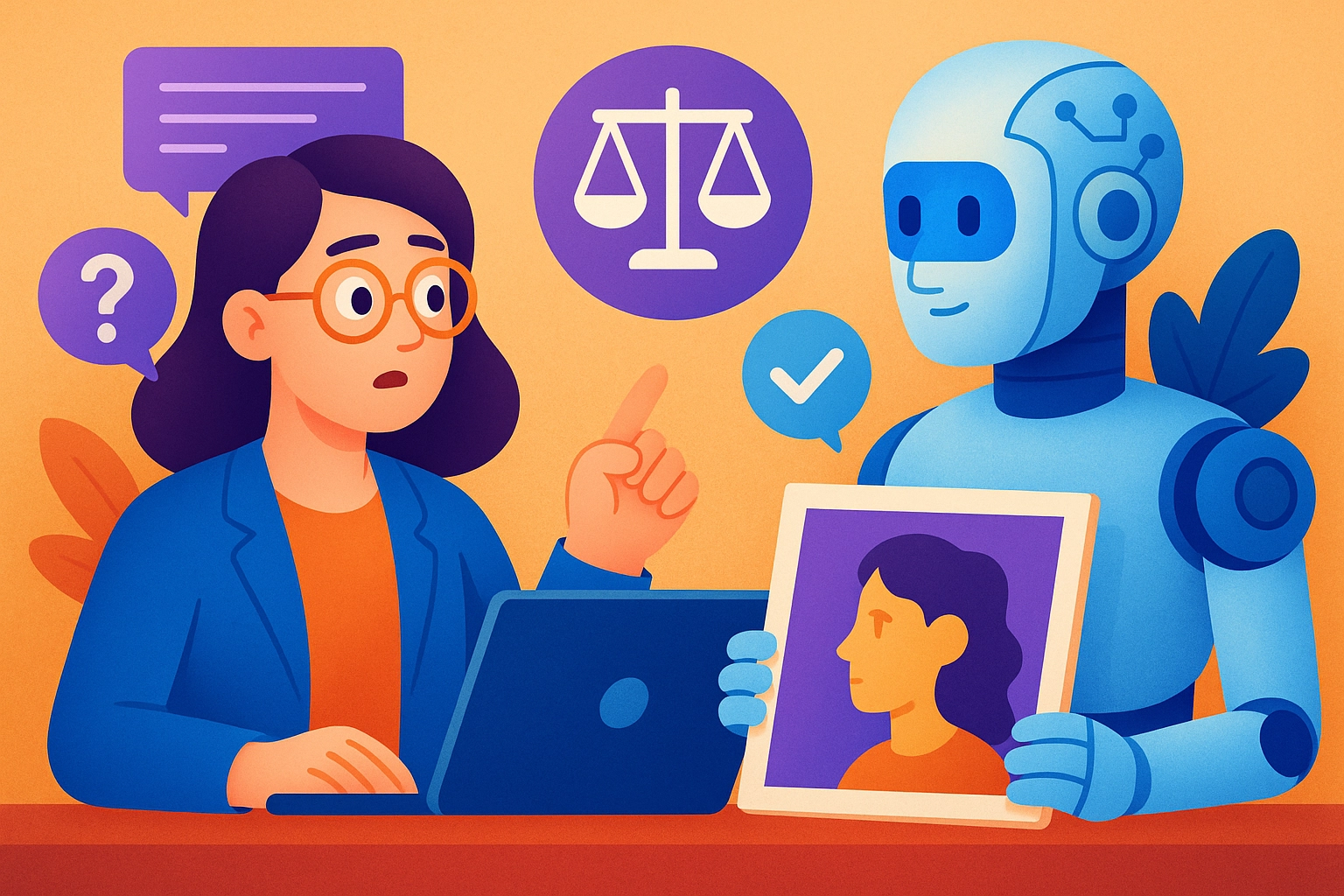
An AI generated image takes first prize at a major exhibition, the applause fades and the questions begin. Who owns the work. Whose data trained the model. What harms or benefits ripple through creative communities. Ethics in AI art is no longer theoretical, it shapes contests, commissions, and careers.
This analysis maps the terrain for practitioners and policy watchers. We will examine consent, attribution, and compensation for human artists. We will review dataset provenance, transparency, and disclosure practices. We will assess bias and cultural appropriation risks, along with potential safeguards such as content credentials and opt-out mechanisms. We will also consider environmental costs, audience trust, and market dynamics.
To frame the discussion, we will connect studio realities to policy. You will see how global guidelines, including the ethics of artificial intelligence unesco, and emerging laws like the EU AI Act, inform responsible creation and use. By the end, you will have a clear view of the key dilemmas, practical decision points, and a concise checklist to guide ethical choices when commissioning, creating, or curating AI driven art.
Current Landscape of AI Ethics
A global baseline for ethical AI
UNESCO’s Recommendation on the Ethics of Artificial Intelligence is now the most widely recognized policy compass for responsible AI, adopted by 194 countries and designed to translate human rights into technical and governance practice. It calls for transparency, accountability, human oversight, and attention to societal impacts across data governance, education, health, gender equality, and environmental sustainability. As a first global standard-setting instrument, it helps policymakers and practitioners move from abstract principles to sector-specific actions and measurement. For creative technologists, this means documenting training data provenance, clarifying consent and licensing, and maintaining human-in-the-loop review for consequential outputs. Readers can explore the policy areas and implementation guidance in UNESCO’s official overview, UNESCO’s Recommendation on the Ethics of Artificial Intelligence. For a concise summary of scope and intent, see this complementary explainer, UNESCO Recommendation on AI Ethics.
Automation’s dual edge in the arts
In creative industries, AI now automates an estimated 30 percent to 50 percent of tasks such as concept iteration, storyboarding, asset tagging, color grading, and reference search. The gains are substantial, faster ideation cycles, rapid A/B testing, and scalable production pipelines. The risks are equally real, systems excel at speed and scale but lack nuanced judgment and ethical reasoning, which introduces quality, context, and fairness gaps if human review is removed. Ethical tension points include originality, attribution, and the appropriation of styles and cultural expressions, particularly from marginalized communities. Practical mitigations include dataset governance checklists, opt-in or documented-licensing data sources, watermarking and content provenance signals, and artist approval gates for final deliverables.
Turning principles into operational practice
Global AI ethics is shifting from static policies to operational controls, which aligns well with creative workflows. Teams can map UNESCO principles to concrete safeguards, model and dataset cards for every project, audit trails for prompts and outputs, red-teaming for cultural harms, and periodic rights and bias reviews. The Creative AI Network supports this transition by convening artists, engineers, and ethicists to test workable standards and share patterns through community discussions and events. We encourage members to pilot small governance sprints, define roles for human oversight, and publish lightweight transparency notes alongside works. This approach keeps experimentation vibrant while grounding creative AI in responsible practice, setting the stage for deeper case studies in the next section.
UNESCO and Global AI Ethics Initiatives
UNESCO’s global baseline and implementation tools
UNESCO’s Recommendation on the Ethics of Artificial Intelligence sets common principles for all member states, and it is now being operationalized through practical instruments. RAM and EIA help governments and cultural institutions measure readiness and translate transparency, fairness, and oversight into controls, and the Recommendation covers 11 policy areas relevant to culture. For visual arts teams, this means provenance in workflows, documented training data, bias testing, and sustainability metrics across the lifecycle. See global implementation examples in Using the UNESCO Recommendation on the Ethics of AI to advance AI governance.
Artist-centered initiatives and residencies
The AI Ethics Residency, developed with Somerset House Studios, gives mid-career artists a platform to interrogate AI art ethics, with applications open until mid-January 2026. Residents develop new digital works, engage policymakers at UNESCO’s Global Forum on the Ethics of AI in June 2026, then present outcomes on Channel later in the year. This format connects studio practice with policy, a critical bridge for the ethics of artificial intelligence UNESCO has been cultivating. Strong proposals align with pillars like human rights, cultural diversity, and environmental sustainability, and include consent-based datasets, evaluation plans, and transparent documentation. Details are in the UNESCO AI Ethics Residency announcement.
Global forums and emerging standards for visual arts
Global forums are shifting from principles to operational standards for creative AI. The impetus is clear, AI is fast and scalable but lacks nuanced judgment, so human governance must be explicit and auditable. Priority risks include repetitive patterning with minimal human input, opaque sourcing, and appropriation that can entrench inequities in visual arts. Complementary initiatives, such as the Center for Hellenic Studies Fellowship in AI Ethics 2026 to 2027, and forum outcomes are likely to emphasize provenance, attribution, content authenticity, and cultural heritage safeguards.
AI-Generated Art: Ethical Challenges
Ownership and copyright
AI-generated art unsettles long standing notions of authorship, since outputs may be assembled from patterns learned across millions of images. Legal systems are moving toward a threshold test, asking whether a work shows sufficient human creativity. In the United States, the latest U.S. Copyright Office guidance in 2025 affirmed that AI assisted works can be protected if meaningful human expression is evident, while purely machine produced outputs remain ineligible. European debates mirror this tension, with photographers at Arles voicing concerns about unconsented training uses of their images and calling for transparency and compensation, as covered in debates at Rencontres d’Arles on AI and photographers’ rights. Practical steps include rights aware dataset curation, provable human contribution logs for prompts and edits, and content provenance metadata to document creative control.
Bias and authenticity
Algorithms reflect their training data, which means biases about gender, race, and culture can surface in stylistic defaults and subject portrayals. Studies of generative outputs have found systematic underrepresentation and stereotyping in cultural professions, reinforcing inequities rather than challenging them. Speed and scale are strengths of AI, yet nuanced judgment and contextual understanding remain weaknesses, which complicates claims of authenticity. For curators and collectors, provenance is expanding to include disclosure of model versions, prompts, and post processing so audiences can assess authorship. Creators can mitigate harm by running bias audits on prompt templates, testing with diverse reviewers, and setting guardrails that avoid imitative outputs of living artists without permission.
Ethical guidelines and mitigation
UNESCO’s ethics of artificial intelligence principles offer a workable compass for culture sector governance when translated into operational controls. That means traceable consent for training data, license verification, explainability notes for creative workflows, and redress channels for takedown or remuneration. Researchers are also piloting mechanisms for fair recognition, such as a proposed royalty and attribution framework for AI art that estimates influence links between human artists and generated works. Artist sentiment is converging on transparency, with 2024 surveys showing majorities favor disclosure of training sources and questioning default ownership claims by model makers. For creative teams, a practical checklist includes dataset documentation, model cards, risk reviews before release, and visible provenance labels, aligning practice with policy and strengthening trust.
The Dual Impact of AI on Creative Processes
Automation that accelerates, and expression that risks flattening
AI now handles a growing share of repetitive studio tasks, from batch image resizing to generating multivariate ad concepts, freeing teams to focus on story, strategy, and craft. Industry examples show that automating asset versioning can cut cycle times by double digits, while human directors reinvest time in concept development, audience research, and iteration, as discussed in balancing automation and human ingenuity. Yet speed has a tradeoff. Systems excel at scale and pattern replication, but they can default to median aesthetics, leading to homogenization and reduced stylistic risk. UNESCO’s 2021 Recommendation, adopted by 194 member states, emphasizes cultural diversity and human oversight, a useful compass when deciding how far to push generative pipelines without eclipsing the artist’s voice Recommendation on the Ethics of Artificial Intelligence.
Balancing AI’s advantages with creative integrity
Creative AI Network supports practitioners with community-led clinics, critique sessions, and practice guides that embed ethical checkpoints into daily workflows. Actionable steps include human-in-the-loop review gates for all AI-assisted assets, provenance logs that track prompts, models, and reference materials, and consent-aware sourcing policies for datasets and styles. Teams can adopt co-creative interaction patterns so AI behaves like a partner rather than an autopilot, for example through the COFI framework’s structured roles, turn-taking, and feedback loops, which reduce style drift and preserve intent co-creative interaction design framework. Establishing explicit boundaries, such as a “style no-go list” and a credit map that recognizes inspiration sources, further safeguards originality and attribution.
Continuous learning for a shifting landscape
The ethics of artificial intelligence UNESCO agenda points toward operationalizing principles through training, auditing, and governance, not just policy documents. For creators, this translates into quarterly skill sprints on prompting, dataset literacy, and legal basics, plus red-team sessions that stress test model bias and appropriation risks. Studios can set KPIs that track both time saved and novelty preserved, for example measuring concept diversity alongside throughput. Participatory governance, where artists co-design acceptable-use policies and escalation paths, ensures that ethical commitments remain practical. As tools evolve, these habits keep teams adaptive and accountable, preparing the ground for stronger governance in the next phase of the industry’s maturation.
Ethical AI Development and Accountability
Transparency and accountability in creative AI
Operationalizing the ethics of artificial intelligence UNESCO highlights begins with traceability and human oversight. In practice, creative teams should ship models and workflows with model cards, dataset documentation, and decision logs that record prompts, parameter choices, and post-processing steps. Transparent provenance is essential for art contexts, so include embedded metadata, watermarking, and verifiable histories to help audiences and rights holders understand how a piece was made. Regular internal audits can test for bias, harmful stereotyping, and training-set contamination, then document mitigations in an ethics risk register. As governance shifts from policy statements to day-to-day controls, teams should adopt explainability summaries that state limits of a system’s judgment and where human review is required, aligning with UNESCO’s Recommendation on the Ethics of AI.
Community practice at Creative AI Network
Creative AI Network advances these principles through public dialogue and peer learning. Members are encouraged to publish a studio-level AI use statement that names responsible roles, escalation paths for ethical issues, and commitments to artist consent and attribution. Practical activities include critique circles that review model outputs for cultural sensitivity, bias, and stylistic homogenization, followed by remediation sprints. The network also promotes red teaming for creative tools, periodic dataset hygiene checks, and annual transparency reports on incidents and lessons learned. These practices turn high-level guidance into shared norms that artists and technologists can apply across projects.
Safeguarding human creativity
AI systems are fast and scalable, yet they lack nuanced judgment and ethical reasoning, which can flatten style and reduce diversity of expression if left unchecked. Minimal human input and pattern recycling risk diluting originality, while uncurated datasets can appropriate work from marginalized communities without credit. To preserve authorship, maintain human-in-the-loop reviews at key stages, require documented consent where possible, and pilot mixed authorship credits with royalty sharing when AI significantly shapes an outcome. Track ratios of AI-assisted to human-originated work to avoid overreliance, and schedule ethics retrospectives at project close to refine guardrails. Equip the next generation of creatives to be both AI-native and human-native, combining tool mastery with cultural literacy and critical judgment.
Future Implications and Conclusion
Operationalizing ethics for innovation
The ethics of artificial intelligence UNESCO Recommendation, adopted in 2021 by 194 member states, now needs translation into day-to-day creative practice. Innovation accelerates when governance is designed into the art pipeline, not bolted on after deployment. Practical controls include provenance and consent tracking for datasets, content credentials in outputs, and model audits that check for IP leakage and representation gaps affecting marginalized communities. These controls respond to evidence that some AI art involves minimal human input and can replicate patterns, which risks flattening originality and credit. Since AI excels at speed and scale but lacks nuanced judgment, human-in-the-loop reviews should gate sensitive uses, with clear escalation paths when ambiguity arises. Measurable targets help, for example 100 percent of training assets documented with provenance, quarterly bias and IP impact assessments, and pre-release red team tests for high-visibility campaigns.
Conclusion, safeguarding human expression
Responsible use protects creative integrity while keeping the door open to new aesthetics and workflows. Actionable steps include artist attribution registries tied to royalty mechanisms, community review boards for culturally sensitive datasets, and prompt discipline guidelines that prohibit derivative mimicry without consent. Creatives should become both AI-native and human-native, developing literacy in model behavior while foregrounding human intent and context. Creative AI Network will continue to convene practitioners, publish practical checklists aligned with UNESCO principles, and host field labs that prototype provenance-by-design, fair licensing, and transparency practices. By coupling ethical rigor with experimental spirit, the arts can expand cultural horizons without sacrificing authorship, recognition, or respect.
No responses yet